Mostrando entradas con la etiqueta travel south america. Mostrar todas las entradas

viernes, 10 de febrero de 2017

Top 10 foods to try in Brazil


Barbecued meat

Brazil and Argentina both claim to be South America’s barbecue champion. And while each have a different approach – from the cuts to the accompaniments – some things remain the same; the ogre-sized quantities of meat, best appreciated at a leisurely pace, and with an elasticated waistband.
In Brazil, premium cuts (the most popular being picanha, rump cap) are seasoned with no more than a liberal shake of coarse salt, before being grilled to pink perfection over charcoal (or wood, if you’re doing it the old-fashioned Southern way). Home barbecues will see sausages, queijo coalho (squeaky cheese-on-a-stick) and chicken hearts sharing space on the grill, while in churrascarías (barbecue-style steakhouses) all manner of meats on skewers, from pork to lamb and wild boar, will be sliced by waiters straight onto your plate.

Moqueca (pronounced moo-kek-a)

More than a mere fish stew, moqueca is served with theatrical flourish as the piping hot clay pot is uncovered at the table amidst clouds of fragrant steam. Baianos (residents of Bahia, in the North-East) and Capixabas (from the neighbouring state of Espírito Santo) both lay claim to the origins of the dish, and both serve up equally tasty variations. At its simplest, fish and/or seafood are stewed in diced tomatoes, onions and coriander. The Capixabas add a natural red food colouring urucum (annatto seeds), while the Baianos serve a heavier version, with dendê (palm oil), peppers and coconut milk. It’s teamed with rice, farofa (fried manioc flour – ideal for mopping up juices) and pirão (a spicy, manioc flour fish porridge, that’s far tastier than it sounds). south america tours

Cachaça

Dating back to the 1500s, cachaça is made from fermented sugarcane juice, and is best known as the fiery kick in caipirinhas – Brazil’s national cocktail. While caipirinhas are often made with uncoloured, unaged cachaças, there are thousands of better-quality golden varieties, aged in wood barrels, and sipped straight up by aficionados.
For the morning after, clear your head with a Guaraná (a sweet, fizzy energy drink), an água de coco (coconut water, best sipped straight from the coconut) or caldo de cana (freshly pressed sugar cane juice). south america travel

Brigadeiros

Brazil’s answer to the chocolate truffle, brigadeiros are so simple to make that they quite literally get rolled out for kids’ parties nationwide. The sweet balls are made by simmering condensed milk with cocoa powder, then whisking in butter and shaping the mix into balls before rolling in chocolate sprinkles. Guaranteed to give an instant sugar high, they’re cloyingly sweet for some palates. Brazilians won’t hear a word against them though.

Pão de queijo

Cheese and bread, two staple favourites the world over, are brought together in glorious union in Brazil’s pão de queijo (cheese bread). This moreish snack is enjoyed as much at breakfast as it is at any time of the day or night. Crispy on the outside, soft and chewy on the inside, the gluten-free breads are made with tapioca flour, eggs and grated queijo Minas (a cow’s milk cheese from the state of Minas Gerais), rolled into small balls. For a naughty twist, you sometimes find pão de queijo in fist-sized rolls – or even the size of a cake – stuffed with anything from yet more cheese or cream cheese to various meaty. south america tours 

Acarajé (pronounced a-ka-ra-zjeh)

One of the most calorie-laden street snacks I’ve ever had the good fortune to try, acarajé is a deep-fried patty of crushed black-eyed peas, palm oil and pureed onions, deep fried in yet more palm oil and then sliced open and stuffed with dried shrimp and vatapá – a rich and spicy puree of prawns, bread, cashew nuts and other ingredients. Originating in Bahia, in Brazil’s North-East, where the flavours have strong roots in African cooking, acarajé is at its best when made on the spot, served piping hot from the vat of oil, with a liberal dash of chilli sauce. 

Quindim

Another favourite from Bahia, quindim is a glossy yellow sweet made with nothing more than eggs, sugar and coconut (with butter a common addition). Baked in cupcake-sized moulds, the bottom is toasted and golden, dense with grated coconut, while the top is a smooth, firm custard that sticks pleasingly to the roof of the mouth. A classic example of Brazil’s miscegenation, quindim is said to derive from the word kintiti meaning ‘delicacy’ in kikongo language (spoken in the Congo and Angola), while the recipe itself was inspired by the Portuguese love affair with egg yolks in sweets and pastries. south america travel

Açaí (pronouned a-sa-ee)

Of all the thousands of fruits from the Amazon, açaí is the best known, thanks to its super-food status. Traditionally eaten by indigenous tribes for energy, the hard purple berry is also used in Amazonian cooking, as a sauce with fish. A clever marketing campaign in the ’80s thrust it into the spotlight as the energy snack of choice for surfers in glamorous Rio de Janeiro. Served as a sweet, gloopy, frozen sorbet, sometimes topped with granola and slices of banana, or whizzed up in juices, it can found in every café, bakery, juice bar and supermarket across the country. You can even buy açaí  vodka, and açaí  beer.

Feijoada

One of the few dishes eaten the length and breadth of Brazil, feijoada is a hearty stew of black beans, sausages and cuts of pork of varying quality – traditionally veering towards the lower end, with trotters, and ears all going into the mix. A labour of love, feijoada done the old fashioned way takes up to 24 hours to make, between soaking beans and desalting pork. Which is why most Brazilians go out to restaurants and bars to eat it – and only ever on Wednesdays and Saturdays. Rice, kale, orange slices, farofa (toasted manioc flour) and pork scratchings are served on the side, with a tipple of cachaça to ease digestion. south america tours

Fried bar snacks

Beer, served so cold that chunks of ice stick to the bottle, is the drink of choice in Brazil. And an assortment of fried foods makes the perfect pairing, be it pastéis – deep-fried parcels of crisp pastry filled with melting cheese, or minced beef, or creamy palm heart –, or crunchy batons of manioc, bolinhos (‘little balls’) most often made with salt cod. Or perhaps coxinha (‘little thigh’), with shredded chicken and potato pureed, shaped like a (very voluptuous) thigh and covered in golden breadcrumbs.
Travel with us, South America Peru Tours - SA Peru. We can offer you trips throughout the most highlighted destinations in South America. We will take you to the best parts of Peru, Brazil, Ecuador, Argentina y Bolivia. Come with us and enjoy!

viernes, 20 de enero de 2017

Ten Foods You Have to Try in South America

South America presents travelers with an unforgettable culinary experience. Whether you favor sit down dinners or on-the-go treats from street vendors, it’s a safe bet that no matter which country you visit, you’ll find something to delight your taste buds. These 10 dishes are some of the most popular and delicious ones to try throughout the continent.

1. Ceviche (Peru)
This popular seafood dish got its start in Peru but has become widespread throughout the coastal regions of both South and Central America. Fresh, raw seafood (usually some sort of white fish) is cured in citrus juice (lemon, lime, or Seville orange), spiked with some heat from chili peppers, and garnished with onion and cilantro. If you love sashimi, you’ll flip for this delicacy.
2. Arepas (Venezuela)
This flatbread sandwich made from ground maize dough or cooked flour can be filled with just about anything, from cheese to meat to eggs. Depending on where you go, the number of arepa varieties on a single menu can go into the double digits! The heartier options are sometimes eaten as a main-course, while smaller or less complex arepas make for perfect snacks.
3. Empanadas (Argentina)
This crispy, half-moon shaped pastry has a hot, savory filling of cheese, meat, or vegetables. In Argentina, every province has its own signature flavor. One is a snack, but two or three can make a meal.
4. Pisco Sour (Peru)
The Pisco Sour is a popular cocktail throughout South America, but it’s the national drink of both Chile and Peru. It is made with pisco, a brandy produced in both Peru, mixed with egg whites, Angostura bitters, lime juice, simple syrup, and ice. Variations on the Pisco Sour incorporate different fruit juices that change up the flavor. Many believe it’s the perfect accompaniment to ceviche, so be sure to try both when in Peru!
5. Yerba Maté (Argentina)
This tea made from the leaves of the South American rainforest holly tree is insanely popular in Argentina, where you’ll see just about everyone carrying around their own metal cup and straw filled with this invigorating, caffeinated brew. Maté is an acquired taste, but the drink is addictively tasty once you get used to it.
6. Pastel (Brazil)
Thinner than an empanada, the pastel is another crispy pastry stuffed with an assortment of ingredients. Popular fillings of these delicious fried pies included melted cheese, ground meat, hearts of palm, and small shrimp. Though pastel is usually a savory treat, it’s possible to find sweet varieties filled with things like guava jam or chocolate.
7. Dulce de Leche (Colombia, Venezuela, Argentina, Uruguay, Brazil)
The lusciously sweet dulce de leche is a popular confection that’s incorporated into many South American desserts. The milky caramel is made by simmering milk, sugar, and sometimes with vanilla, and served with everything from donuts and muffins to toast. It can be hard to find outside of South America, and many visitors who try it for the first time are instantly hooked. Be sure to bring some home to satisfy those post-vacation cravings!
8. Brigadeiros (Brazil)
The brigadeiro is a chocolate truffle or bonbon native to Brazil. These delightful morsels are made from condensed milk, powdered chocolate, and butter, and covered with chocolate sprinkles — a chocoholic’s dream!  
9. Platanos Fritos (All of South America)
Fried plantains, or platanos fritos, are a quintessential South American delight. The soft texture just about melts in your mouth, and the crumbly burnt bits are beyond delicious. These delicious treats can be found pretty easily throughout South America.
10. Chorizo (Argentina)
Argentina is a nation of unabashed carnivores, but chorizo stands out as one of the country’s most delicious meat. You can find this sausage on the menu at just about any Argentine restaurant, as well as tempting you with its inimitable smoky scent at every street stall. Chorizo has made its way around the world at this point, but don’t miss the chance to try it in its native land.

lunes, 16 de enero de 2017

7 Best Places to Visit in Ecuador

Quito

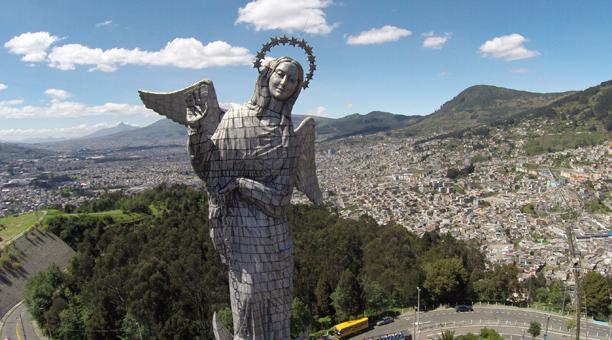
Cascading down the rugged slopes of Pichincha Volcano, the highest official capital city in the world is perhaps the biggest bucket-list destination in all of Ecuador.
In 1978, the center of the city was designated as one of the first ever UNESCO World Cultural Heritage Sites, hailed for its lived-in pueblo homes and gilded Spanish plazas, painted colonial edifices and enchanting cobbled streets, each trodden by conquistadores and Incan imperialists alike.

On the edges of town, the hillsides of El Panecillo give way to the soaring Andean peaks, mist-clad or snow-topped depending on the time of year.
Meanwhile, Mercado Santa Clara and the various eateries pulse with local chatter and camarones and cuy (that’s guinea pig to you and me!) dishes, and La Carolina Park beats with bikers and football players alike.

Cotopaxi

Brooding and bubbling, mist-clad and snow-tipped, Cotopaxi is the great, hulking monster of the Ecuadorian backcountry.

Although not the highest peak in the country (that honour goes to the colossal massif of Chimborazo), Cotopaxi lurches so high above the horizon that it can even be seen from the central districts of Quito when the mists clear.
Climbers come in their droves to conquer the summit too, strapping on the crampons and wielding ice picks as they attempt to scale what is one of the few permanent ice fields on the Earth’s equatorial circumference.

Cuenca

Just like its Spanish namesake, Cuenca is a real beauty.
Oozing colonial charm and elegance from every one of its neo-classical and baroque pores, the city is spiked with countless church spires and topped with the bulbous, coloured domes of the Catedral Nueva – photogenic in the extreme.

Travelers head in to wander the tight-knit streets and enchanting 16th-century plazas here, gawping at the various churches and the perennial bougainvillea blooms that erupt around the Monastery of El Carmen de Asuncion and the like.
And once you’ve checked off all the Spanish history, be sure to head north out of town, to where the crumbling remnants of Ingapirca pepper the hills of Canar Province.
These are the largest known Incan remains in all of Ecuador.

Otavalo

Set high in the Northern Sierra ranges north of Quito, the charming little backwater town of Otavalo has become a real gringo favourite in the last couple of decades.
But its draws aren’t new.

No sir, that buzzing marketplace, complete with its stacks of alpaca wools and colourful Quechua clothes, animist totems and reed-grass voodoo pieces, has been going for centuries, and the people here can trace their roots back to the pre-Incan tribes of the high Andean plateaus.
Then there’s the backcountry, which lurches like a great backbone out of the earth with the peaks of Imbabura Volcano – another of Ecuador’s top climbing spots.

Galapagos Islands

It was in 1835 that one Charles Darwin and his ship, the HMS Beagle, drifted in to these far-flung isles some 906 kilometers west of the Ecuadorian mainland.
What the great scientist found there was to inspire one of the most revolutionary theories of all time.

Yes sir, from blue-footed boobies to red-billed tropicbirds, colossal albatrosses to fur seals and bottlenose dolphins, red bats and flamingos all peppering the volcanic slopes and windswept beaches here, it’s hardly surprising that Galapagos was – and is – famed mainly for its great biodiversity.
Today, travelers come to spy out the arrays of wondrous wildlife, scuba dive in the reefs and explore the otherworldly landscapes of the archipelago’s hinterland.

Guayaquil

Guayaquil is the great southern metropolis, Ecuador’s largest city, and a throbbing port town with multicultural influences coming out of its ears.
It can be found straddling the delta of the Guayas River as it spread out to meet the Pacific Ocean; a patchwork of breeze-block barrios and ice-cream-coloured hillside homes that finds its zenith on the bubbling Malecon walkway along the water.

Here, ceviche holes-in-the-wall throw out homemade seafood salads and students straight out of Guayaquil’s many lecture halls sip beers as the sun sets against the sea.
Meanwhile, the Zona Rosa and Penas districts pulse with nightclubs and discos, and there’s always somewhere to sip a cheeky tequila in the early hours!
Quilotoa Loop
Hikers who enjoy trekking through the backcountry surely will enjoy the Quilotoa loop, a trail that takes visitors through several of Ecuador’s remote Andean villages. 


Hiking the loop can take up to four days, but can be done in less time if hikers take a bus between points, though they’d be missing out on some ancient trails if they did this. The views of a crater lake in Quilotoa are nothing short of spectacular. Villages host colorful markets throughout the week, with Sanquisili’s Thursday market considered one of the best.


South America Peru tours - SA Peru, can help you plan a memorable trip with many diverse tour options. Exploring the old Inca palaces, hike along Inca trails, witness colorful local celebrations, visit museums with amazing artifacts before making your way to the amazing Amazon Rainforest wildlife, the wonderful beaches, and the marvelous Patagonia.

miércoles, 11 de enero de 2017

Best Places to Visit in Brazil

Famous for being home to one of the world’s top football teams, the Rio de Janeiro Carnival and the remarkable Iguazu Falls, Brazil is an exciting world travel destination. As South America’s largest country, Brazil covers a majority of the continent’s northeastern region and borders all of its countries except for Chile and Ecuador. From the Amazon rainforest in the North to the tropical beaches along the Atlantic, to the Pantanal wetlands and the vibrant metropolises of the Southeast there are plenty of interesting places to visit in Brazil.


Brasilia

Located in the Brazilian Highlands, Brasilia was installed in 1960 as Brazil’s capital. Brazil’s former President Juscelino Kubitschek ordered the city to be planned and developed into what some refer to as a utopia. Brasilia’s modern day infrastructure is designed in the shape of an airplane in which each of its sections serve as different districts such as government, commercial, residential and cultural. The city’s new and creative designed buildings attracts many architecture aficionados. Most significant is the Three Powers Square, which houses the Presidential Palace, the Congress and the Supreme Court. Other important buildings include the Brasilia Cathedral with its glass roof that resembles hands reaching up to heaven.


Olinda

One of Brazil’s best-preserved colonial cities, Olinda is located on Atlantic Coast in the northeastern state of Pernambuco. Perched on a picturesque hilltop surrounded by trees, Olinda’s historic downtown is a treasure trove of colonial churches, colorful old houses, restaurants, museums and numerous artisan studios. Every year, Olinda hosts its lively Carnival celebration that differs somewhat from those of Rio de Janeiro and Salvador in that Olinda’s festival is best attended at daytime and features the music, dances and traditions of African culture.(south america tours)


Fortaleza

Nice beaches, dynamic shopping and lively culture all make Fortaleza one of Brazil’s popular places to visit. The capital of the Ceará state on the country’s northeastern coast, Fortaleza is Brazil’s fifth largest city. The most popular beach is Praia do Futuro, but other favorites are Iracema, Mucuripe and Meireles. Not only are the beaches great for swimming, sunbathing and surfing, but they also offer hotels and restaurants. Fortaleza also serves as the jumping-off point for many visitors to truly spectacular beaches, rolling dunes and idyllic fishing villages up and down the Ceará coast.


Paraty

A paradise of tropical forests, waterfalls, emerald sea and coastal mountains, Parati is a popular tourist attraction located along Brazil’s Green Coast in the Rio de Janeiro state. Also spelled Paraty, this beautiful city is a former Portuguese colony established on the shores of the Bay of Ilha Grande. The heart of Parati is its historic center with cobbled streets and multicolored colonial houses, many of which now serve as bed-and-breakfast accommodations called pousadas. One of the most popular attractions are the colonial defense forts that still boast original walls and cannons.(south america travel)


Recife

Nicknamed the “Venice of Brazil” because of its numerous waterways and bridges, Recife is the capital of the Pernambuco state and one of the largest and most important cities on Brazil’s northeastern coast. Situated amid tropical forests with many islands and rivers, Recife is a popular tourist destination because of its historic old town, beaches and vibrant culture. Recife was a Dutch colony during the 17th century, and nowhere is this more evident than the historic district where many colonial buildings still remain. The beaches here are considered some of the best in Brazil. Lined with hotels, restaurants and bars, Boa Viagem is the most popular beach with its pristine white sands, clear water and coral reef.


Manaus

The capital of the Amazonas state in northwestern Brazil, Manaus is an important tourist destination because it serves as a gateway to the Amazon rainforest. As a result of the region’s flourishing rubber industry during the early 20th century, Manaus today is one of Brazil’s largest cities, featuring distinguished landmarks like the Amazonas Opera House, and the Rio Negro Palace. Another significant sight is the Meeting of the Waters, which is a natural phenomenon where the two rivers of Negro and Solimões run side by side for more than three miles without fully mixing.(south america tours)


Salvador

A historic Old City, beautiful beaches, lively culture and one of the world’s biggest Carnival celebrations all fashion Salvador into one of the best places to visit in Brazil. One of the oldest cities in the Americas, Salvador is Brazil’s third largest city and the capital of the Bahia state. Situated on the coast of the Bay of All Saints, Salvador offers fantastic beaches that are ideal for sunbathing, swimming and surfing. Some of the most popular include Porto de Barra, Flamengo and Stella Maris.


Sao Paulo

Not only is Sao Paulo the largest city in Brazil, but it is also one of the largest in the world according to population. Located in southeastern Brazil, Sao Paulo is known for its skyscrapers, gastronomy and robust culture scene. It is home to many ethnic groups from all over the globe including the largest Japanese community outside of Japan. Although Sao Paulo is known for its concrete jungle, it is also contains a large number of public parks and even portions of the Atlantic rainforest.(south america travel)


Iguazu Falls

One of the world’s most stunning natural wonders, Iguazu Falls is a series of magnificent waterfalls located on the Iguazu River, straddling the border between Brazil and Argentina. The falls in and of themselves are a breathtaking spectacle, but their beauty is all the more enhanced by the surrounding lush forest teeming in exotic wildlife. The gateway to the falls on the Brazilian side is Foz do Iguaçu, a big and reasonably safe city by Brazilian standards.


Rio de Janeiro

There is no destination on earth more animated and exciting than Rio de Janeiro. Located in southeastern Brazil, Rio de Janeiro is the most visited city of South America due to its famous mountains, landmarks, beaches and Carnival festival. Rio de Janeiro is situated on one of the world’s largest harbors surrounded by natural attractions that include the Sugarloaf and Corcovado mountains and famous beaches like Copacabana and Ipanema. The city’s iconic landmark is the enormous Christ the Redeemer statue sitting atop Corcovado mountain. Carnival celebrations here are among the largest in the world, with vibrant parades, costumes, dancing, music, fireworks and street parties.


Travel with us, South America Peru Tours - SA Peru. We can offer you trips throughout the most highlighted destinations in South America. We will take you to the best parts of Peru, Brazil, Ecuador, Argentina y Bolivia. Come with us and enjoy!
martes, 3 de enero de 2017

Best Places To Visit In Argentina

From the jungles and waterfalls of the tropical north to the glaciers and penguins of the arctic south, Argentina is a country like no other. As the eighth largest country in the world, Argentina stretches over a large portion of South America and because of this, contains numerous quality destinations to visit, depending on your interests. From the vineyards of Mendoza to the big city of Buenos Aires, here are 9 places you definitely don't want to miss when making a trip to Argentina.

Iguazu Falls

Often cited for its place on the New Seven Wonders of Nature list, Iguazu Falls is arguably one of the most beautiful waterfalls in the world. Located in the northern tropical region of Argentina, a visit to Iguazu Falls National Park offers incredible views of the falls, as well as different types of tours to explore the surrounding jungle. In addition, because Iguazu is located on the border of Argentina and Brazil, visitors have the option of viewing the falls from both sides, each offering its own advantages.


Buenos Aires

As the capital city of Argentina and one of the most visited places in all of South America, Buenos Aires is the starting point for most tours in Argentina and definitely a must-see when visiting the country. Offering a plethora of museums, an incredible nightlife, historic architecture, and a bustling and developing port area, Buenos Aires is above all famous for its tango and unique porteño culture.


Perito Moreno Glacier

One of the world's biggest glaciers—and one of the few that is actually growing instead of shrinking—is located in Argentina's Patagonia region. Just 78 km (48 miles) from the town of El Calafate, the Perito Moreno Glacier is located within the Los Glaciares National Park and situated on the shores of Lake Argentino. Visitors can take a boat tour out to the glacier, or if interested in exploring it from a closer angle, can hike or trek the glacier. 


Mendoza Wine Country

One of the things Argentina is most known for is its delicious wine. Just to the east of Chile, at the foot of the Andes Mountains, Mendoza is home to more than 1,200 wineries, accounting for more than 70% of the country's total wine production. Visitors can enjoy hikes in the Andes, or stay grounded and ride horses or bikes through some of the area's family-owned bodegas.(south america travel)


Northwest Argentina: Salta & Jujuy

Located in the Northwest corner of the country, the province of Salta is known for its famous salt flats and the Calchaqui Valley, with its picturesque red rock formations. Nearby Jujuy also offers some incredible natural landscapes, archaeological sites, and cultural opportunities to explore.


El Chalten

Recognized for its incredible hiking opportunities, El Chalten is a must-see for nature lovers looking to explore the gorgeous landscape of Patagonia. Located just three hours from El Calafate, visitors can take a bus from Calafate that offers spectacular views of the region along the way.(South America tours)


Ushuaia

One of Argentina's most prized possessions lies in its claim to the southern-most city in the world. Just north of Antarctica, the city of Ushuaia has a very unique history, including the site of a prison during the early 1900's. Visitors can take advantage of a number of cruises departing from Ushuaia, many of which travel down the famous Beagle Canal.   


Puerto Madryn

Famous for its arctic wildlife, Puerto Madryn is Argentina's prime location for whale watching and penguin watching in Patagonia. The nearby Valdes Peninsula, a UNESCO World Heritage site, is home to sea elephants, orcas, and southern right whales. Depending on the time of the year, visitors can get a glimpse of these whales, or can venture a short distance south to find South America's largest Magellan penguin colony in Punta Tombo. (South America travel)


Bariloche


Surrounded by the Andes Mountains, skiers will want to visit Bariloche during the winter months for the best conditions. If skiing is not on your itinerary, visitors can choose between a number of other exciting adventures, like the nearby Nahuel Huapi National Park, which is home to the gorgeous Nahuel Huapi Lake and offers opportunities for day hikes and mountain climbing as well as kayaking across the lake.


Travel with us, South America Peru Tours - SA Peru. We can offer you trips throughout the most highlighted destinations in South America. We will take you to the best parts of Peru, Brazil, Ecuador, Argentina y Bolivia. Come with us and enjoy!