Mostrando entradas con la etiqueta south america tours. Mostrar todas las entradas

lunes, 5 de junio de 2017

Tourism in Buenos Aires

Buenos Aires is in the midst of a tourism boom, according to the World Travel &Tourism Council, which reveals strong growth for Argentina Travel and Tourism in 2007 and in coming years, and the prestigious travel and tourism publication; Travel + Leisure, a monthly magazine, travelers voted Buenos Aires the second most desirable city to visit after Florence, Italy. Buenos Aires, regarded as the “Paris of South America”, offers elegant architecture, exquisite cuisine, a legendary nightlife, and fashionable shopping. Argentina has become famous for its rich European flavor.


Tourist attractions

The most popular tourist sites are found in the historic core of the city, in the Montserrat and San Telmo neighborhoods. Buenos Aires was conceived around the Plaza de Mayo, the colony's administrative center. To the east of the square is the Casa Rosada, the official seat of the executive branch of the government of Argentina. To the north, the Catedral Metropolitana which has stood in the same location since colonial times, and the Banco de la Nación Argentina building, a parcel of land originally owned by Juan de Garay. Other important colonial institutions were Cabildo, to the west, which was renovated during the construction of Avenida de Mayo and Julio A. Roca. To the south is the Congreso de la Nación (National Congress), which currently houses the Academia Nacional de la Historia (National Academy of History). Lastly, to the northwest, is City Hall. South America tours

Avenida de Mayo links the Casa Rosada with the Argentine National Congress. On this avenue there are several buildings of cultural, architectural, and historical importance, such as Casa de la Cultura, the Palacio Barolo and Café Tortoni. Underneath the avenue, the first subte (metro) line Línea A (SBASE).svg in South America, opened in 1913. The avenue ends at Plaza del Congreso, which features a number of monuments and sculptures, including one of Auguste Rodin's few surviving original casts of "The Thinker". 2007 list of the World's Best Cities, by Travel + Leisure Magazine. Today it still ranks in top 10.
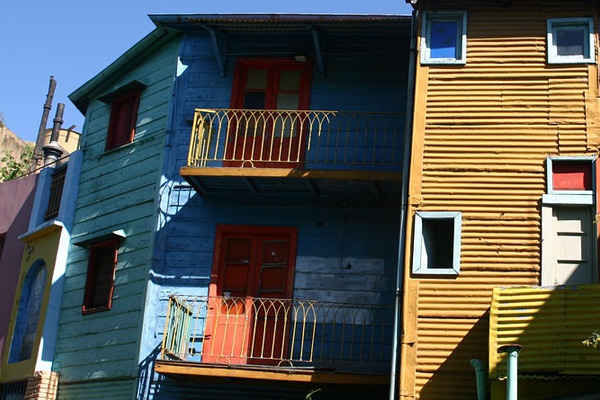


The Manzana de las Luces ("Illuminated Block") area features the San Ignacio church, the Colegio Nacional Buenos Aires, and the old city council building (1894 to 1931). This area features tunnels and catacombs, which crossed underneath the Plaza de Mayo during colonial times. In the San Telmo neighborhood of, Plaza Dorrego hosts an antiques fair on Sundays, complete with tango shows. They also have tango shows daily at the famous plaza. On weekends they involve many tourists to learn how to dance. Frequent tours and activities are also available at the Church of Nuestra Señora de Bethlehem, the San Pedro Telmo Parish and the Antonio Ballvé Penintetiary Museum. The National Historical Museum in Parque Lezama is a few blocks south. The Ayres Porteños Hostel is a very famous hostel as it is also a tourist attraction, it is decorated and painted by artists from La Boca and possesses a unique collection of local paintings among its walls. South America travel


The borough of Recoleta is home to a number of places of interest, including the Museo Nacional de Bellas Artes, the Biblioteca Nacional, the Centro Cultural Recoleta, the Faculty of Law of the Universidad de Buenos Aires, the Basílica Nuestra Señora de Pilar, the Palais de Glace, the Café La Biela and the Cementerio de la Recoleta, where Eva Perón's crypt can be visited, among those of many other Argentine historical and cultural figures.

El Ateneo Grand Splendid is one of the city's most well-known bookshops and, having moved from its original downtown location, today operates on Santa Fé Avenue, where "Barrio Norte" meets the borough of Palermo. Once a theatre and later a cinema, the building still retains the feeling of the grand theatre it once was, despite its recent renovation. Plaza Italia, site of a monument to Giuseppe Garibaldi, the Buenos Aires Zoo, the botanical gardens, and the Palermo woods (famous for its paddleboat lake, rose garden, and planetarium) are all a short walk to the east of it. South America tours


The borough of Retiro features the Retiro Railway Terminal and several other notable landmarks, including the Plaza San Martín square, its monument to the Falklands War Fallen, an equestrian statue of General San Martín and, nearby, the Anglo-Argentine community's present to Argentina the Torre Monumental (formerly Torre de los Ingleses), the ornate Basilica Santísimo Sacramento and the Art Deco Kavanagh Building, still one of the tallest in the city.

The Museo de Arte Latinoamericano de Buenos Aires is located in the barrio of Palermo, and is one of the most important in the country. In this neighbourhood can also be found the Bosques de Palermo, the Planetary and Buenos Aires Zoo. South Americatravel

The southern area of the city, (including barrios such as Barracas and Parque Patricios) while traditionally not a top tourist destination, is historically the source for much of the city's early tango culture. It is now home to a burgeoning arts scene. Another important tourist site is Avenida Corrientes; among dozens of cinemas, theatres, booksellers and music shops, this avenue is home to the San Martín Cultural Center, Paseo La Plaza and the Luna Park coliseum. At the intersection of this avenue with Avenida 9 de julio, the Obelisco, the emblem of the City of Buenos Aires, is located. The Art Deco Mercado de Abasto, which is currently a shopping mall, is also on this avenue.

At the southwest end of the city, the Buenos Aires circuit and the Parque de la ciudad are located. One of the biggest thematic parks in Latin America, the amusement park centers around its 200 metre-high Torre Espacial tower. South america tours

Buenos Aires has been attracting a homosexual community in Latin America. Since 2006, the city has seen unprecedented numbers of gay-oriented cruise ship arrivals, an increase in the number of gay-owned businesses, and the construction of a five-star gay-oriented hotel; despite its relatively unfavorable location, the Axel Hotel Buenos Aires has remained popular since opening in October 2007.


In recent years, non-traditional tourism options have become quite popular among travelers visiting Buenos Aires. Downloadable audio walking tours of Buenos Aires as well as bike tours or the free tours are three examples of the endless possibilities to explore the city. South America travel

miércoles, 1 de marzo de 2017

Rio Carnival

The Magic of Carnival in Rio de Janeiro

From the beautiful and sexy beaches of Rio de Janeiro to Rio Carnival and the Rio Nightlife, the type of energy that the city of Rio emulates is just simply electrifying. What is even more exhilarating are the deliciously bronzed samba dancers, the pulsating music, the energy and applause of the spectators filled with Cariocas and visitors from around the world who call come to the same place to experience the world famous Rio Carnival. Held every year during the week leading up to Lent, Rio Carnival attracts visitors from all corners the globe. It is inconceivable to think of Rio without thinking of its unrivaled Carnival. Anticipation builds and the excitement grows as Carnival time gets closer and closer. Without a doubt, this is the favorite holiday celebration in Rio. The city glows with the smiles and energy of the locals — or Cariocas. Samba music can be heard coming from neighborhoods throughout the city and crowds gather to dance and play all day, night and straight into the next morning. It is the inherent spirit of the Cariocas and their true joie de vivre that makes Rio Carnival such a glorious success year after year!

The World Is Watching

While preparations continue for the Carnival all year round, technical rehearsals by the samba schools are held at the Sambadrome for a few weeks before the big weekend of competition. This is the prelude to the most extravagant, beautiful, and sexy spectacle, which the whole world waits for with baited breath. For every Carioca, this is a sign that their much awaited four-day holiday is around the corner. The Carnival is watched on television sets all over the world. The energy and spirit of the celebration transcend the one-dimensional view from the TV to captivate each viewer and draw him or her into the excitement and ecstasy of the festival. south america tours

The Party Never Stops

All else comes to a halt on the four days of the Carnival, with the exception of samba, women, beer, and partying all night long. Once the Sambadrome empties, the parties continue at every street corner all over the city. Throughout the neighborhoods of Rio Cariocas celebrate the arrival of the Carnival. People dance along the streets singing the songs of the Samba. Everyone comes together in friendship and fun to enjoy the balls, street parades and the excitement of the Sambadrome. Cariocas make no distinction between locals and foreigners, who are most welcome to participate in the event. In fact, visitors can grab a place on the samba strip as a participant with one of the samba schools. All you need is to buy one of the school specific costumes.

How it all started

There are many theories as to the origin of the Carnival with stories of it being a pagan celebration in ancient Rome. Carnival balls became popular in Rio in the nineteenth century with legendary balls held at the Copacabana Palace Hotel and the Municipal Theater. The inevitable influence of Afro-Brazilian culture in the form of the samba heralded the beginning of the Samba Parade in the 1930s. It is the ethnic melting pot of Rio that makes this festival unlike any in the world. The combination of the cultural diversity and Brazilian swing rhythm is what makes the Carnival in Rio so unique.south america travel

Porta Bandeira – The Crowd Favorite

Women are at the head of the parade of each samba school. They have the job of conquering not only the spectators’ hearts, which is not too difficult, but those of the judges too. The Porta Bandeira, the flag bearer of the samba school, in an intricate sequin and feather costume is the first to enter the samba strip as the crowds stand and cheer as she passes by performing the most elaborate samba steps.

Accompanying the Porta Bandeira is her protector the Mestre Sala. Inspired by the nobility of the eighteenth century, the couple is adorned with very elaborate costumes. His job is to guide and watch over her as she dances along the parade route. Originally, he would guard her armed with a knife so other Samba schools could not distract her and cause her to lose points. The Porta Bandeira must dance and interact with the Mestre Sala as well as the audience. She cannot allow the flag she carries to touch her body or wind around the flagpole. To do so would result in a loss of points for her troupe. south america tours
Then come the floats with beautiful women sensually dancing the samba in the tiniest of costumes, accompanied on either side of the floats by ‘alas’ or sections of the samba school. Each section has a different type of costume, all of them breathtaking to say the least.

Four Nights of Competition

Each samba school has 80 minutes to parade down the strip at the Sambadrome. The Rio Carnival kicks off with the opening ceremony on Friday where King Momo is crowned by Rio’s mayor. In the evening a children’s parade sets the tone for the next four days of revelry combined with an intense show of dance, theater, arts and music. On Saturday, members of the Access Group strut their stuff in the hopes of joining the major league players. Sunday and Monday are reserved for the 12 best samba schools vying for the championship spot where six of the finest march on each day.

Glorious Themes and Samba Schools

The schools of samba are a musical genre symbolizing Brazil. At the Sambadrome each school plays out its own story with a common theme ranging from politics to arts and sports. What everyone looks forward to apart from the dancers is each team’s unique song, creative costumes, and choreography. Each Samba School tries to be more creative than its competitor. From levitation to a flying astronaut, the Sambadrome is always full of surprises. And each year the schools seem more and more creative as rich imagination give way to show stopping flights of fancy. south america tours

Rio Carnival Parade Ticket. A Ticket to Lots and Lots of Fun.

All roads lead to the Rio Sambadrome on Carnival nights. It is advisable to take the subway or a taxi to reach the stadium. Admission is around $70 for the grand stand, with seating arrangements starting at $200′s. However, it is even more fun joining the samba parade. To be able to participate in a Samba School parade, all you need to do is pre-order a costume with us. Yes, your costume is your ticket to parading.

miércoles, 22 de febrero de 2017

What to know before going to colombia


1. Colombia is generally safe to visit

There was a time when travelers avoided the country due to its ugly association with cartels and violence. That has largely disappeared and what remains is a vibrant country with spectacular scenery, friendly people and a rich culture. In fact, some areas in Bogota, like the sophisticated and electric Zona-T, feels like any other cosmopolitan city from the developed world. The public transportation of Medellin, a city that has emerged from the shadows of drug cartels, the Medellin Metro is a thing of beauty and is one of the most successful in the world. south america tours
Violence should not be a reason you are avoiding that trip to Colombia. But, having said that, it is wise to be aware of your surroundings. Practical safety considerations, same as any other unfamiliar city, are essential. Stick to largely crowded place - on your first trip, consider popular tourist destinations or the cities of Colombia. Colombia is still struggling to with economic disparities so it is better to refrain from ostentatious displays of wealth and branded accessories.

2. Understand the Colombian Peso

The local currency is the Colombian Peso (COP$) and the denominations are in mil, Spanish for thousand. Menus at restaurants and cafes might list a cappuccino for $5.000 - this means the cost is 5mil. In common parlance, the mil is often dropped. Frequently used notes come in denominations of 1000, 2000, 5000, 10000, 20000 and 50000 pesos.

3. You get the best exchange rate by using cards or at ATMs

Even better if you have an international card with no transaction fee. A Citibank card works best - they give great exchange rate at ATMs, which are commonly available in major cities and if you have a card, you don't have to bear the additional fee. But even with the fee, in case you don't have a Citibank card, you still get a better deal using a card for payment or withdrawing from an ATM. south america travel

4. Check visa requirements

Check again,you just might not need a tourist visa to enter Colombia. For example, while passport holders of countries like USA, European Union and Canada, among others, don't require visa to enter; holders of United States Visa or Schengen Visa (except transit visa), from China, India, Thailand and Vietnam are also granted visa-free access. It is best to visit Migración Colombia or call their customer support number and check the current status for your country. They are also prompt to reply to emails.

5. Check the weather app before planning your visit

 And I cannot stress on this enough. Every city has a completely different climate, mainly because of the different altitudes they are located at. While Bogota enjoys a chilly, autumn-in-NYC like weather all year round, Medellin is slightly warmer and Cartagena is a sunny, tropical coastal town. Dress and pack accordingly: for Cartagena, pack a hat, sun-glasses, (loads of) sunscreen and flowing dresses while Bogota calls for jeans and scarfs and sophisticated western wear. south america tours

6. Getting around in Colombia

Flights might be the best option for inter-city travel, especially when you have to cover so much in little time - and it is not expensive. Go to the local sites of LAN, Avianca or Copa for better deals.
Public transport, like anywhere else in the world, is the cheapest means to get around within a city. Medellin has a fantastic metro system and I recommend riding it at least once. Bogota's version of public transport, after many failed attempts at a metro, is the Transmilenio - a bus rapid transit. Quite efficient, this can be a little hard to figure out, but not impossible. Ask if you don't understand - the people are very helpful.
If you must take a cab, refrain from hailing it off the road. Download Easy Taxi  or Tappsi - these apps are popular and a safer way to hail a cab.

7. Consider investing in a travel guide

Yes, even if you have done all your research. And this is mainly to keep track of all the trivia and history tidbits these guides offer, and not to follow a certain trail. I was blown away by how rich in history Colombia is and found that my travel guide was a good story teller. south america travel

8. It is not imperative to be fluent in Spanish to visit

 I hardly know any Spanish and I had a blast! Not a lot of people speak English (especially in Medellin) but a fair amount of them do. People in Colombia are very helpful and most of them are patient enough to see you awkwardly act out words. Carry a piece of paper and pen if you must (this was handy for me when I had to ask around for Transmilenio route numbers in Bogota - the Transmilienio staff spoke no English).
I will recommend a week of language-learning app Duolingo though. Practice basic words that will help you get around.

9. Go with an appetite

There are plenty of international food options available in Colombia but please do try the local cuisine. Try the Ajiaco (a Bogota staple soup made with chicken, three varieties of potatoes, and Colombian herbs), Cazuela de Fríjoles (red bean stew), Arepa (a flatbread made of ground maize dough or cooked flour), Empanada ( a popular street food made by folding dough or bread with meat or cheese stuffing) and if you dare, Mondongo (soup made from diced tripe slow-cooked with vegetables). south america tours

10. Haggling is accepted

This is true for certain means of transportation like taxis off-the-road and (especially) street vendors. I bought a necklace from a street vendor for $10COP. He quoted $50COP to start with. Ha! Look out for them on the streets of Bogota and Parque Lleras in Medellin. And remember to definitely haggle when buying sombreros in Cartagena!
This should be good preliminary preparation. Colombia is a wonderful country and I highly recommend you plan your next vacation there. Oh, and don't forget to carry your camera! explore south america

viernes, 10 de febrero de 2017

Top 10 foods to try in Brazil


Barbecued meat

Brazil and Argentina both claim to be South America’s barbecue champion. And while each have a different approach – from the cuts to the accompaniments – some things remain the same; the ogre-sized quantities of meat, best appreciated at a leisurely pace, and with an elasticated waistband.
In Brazil, premium cuts (the most popular being picanha, rump cap) are seasoned with no more than a liberal shake of coarse salt, before being grilled to pink perfection over charcoal (or wood, if you’re doing it the old-fashioned Southern way). Home barbecues will see sausages, queijo coalho (squeaky cheese-on-a-stick) and chicken hearts sharing space on the grill, while in churrascarías (barbecue-style steakhouses) all manner of meats on skewers, from pork to lamb and wild boar, will be sliced by waiters straight onto your plate.

Moqueca (pronounced moo-kek-a)

More than a mere fish stew, moqueca is served with theatrical flourish as the piping hot clay pot is uncovered at the table amidst clouds of fragrant steam. Baianos (residents of Bahia, in the North-East) and Capixabas (from the neighbouring state of Espírito Santo) both lay claim to the origins of the dish, and both serve up equally tasty variations. At its simplest, fish and/or seafood are stewed in diced tomatoes, onions and coriander. The Capixabas add a natural red food colouring urucum (annatto seeds), while the Baianos serve a heavier version, with dendê (palm oil), peppers and coconut milk. It’s teamed with rice, farofa (fried manioc flour – ideal for mopping up juices) and pirão (a spicy, manioc flour fish porridge, that’s far tastier than it sounds). south america tours

Cachaça

Dating back to the 1500s, cachaça is made from fermented sugarcane juice, and is best known as the fiery kick in caipirinhas – Brazil’s national cocktail. While caipirinhas are often made with uncoloured, unaged cachaças, there are thousands of better-quality golden varieties, aged in wood barrels, and sipped straight up by aficionados.
For the morning after, clear your head with a Guaraná (a sweet, fizzy energy drink), an água de coco (coconut water, best sipped straight from the coconut) or caldo de cana (freshly pressed sugar cane juice). south america travel

Brigadeiros

Brazil’s answer to the chocolate truffle, brigadeiros are so simple to make that they quite literally get rolled out for kids’ parties nationwide. The sweet balls are made by simmering condensed milk with cocoa powder, then whisking in butter and shaping the mix into balls before rolling in chocolate sprinkles. Guaranteed to give an instant sugar high, they’re cloyingly sweet for some palates. Brazilians won’t hear a word against them though.

Pão de queijo

Cheese and bread, two staple favourites the world over, are brought together in glorious union in Brazil’s pão de queijo (cheese bread). This moreish snack is enjoyed as much at breakfast as it is at any time of the day or night. Crispy on the outside, soft and chewy on the inside, the gluten-free breads are made with tapioca flour, eggs and grated queijo Minas (a cow’s milk cheese from the state of Minas Gerais), rolled into small balls. For a naughty twist, you sometimes find pão de queijo in fist-sized rolls – or even the size of a cake – stuffed with anything from yet more cheese or cream cheese to various meaty. south america tours 

Acarajé (pronounced a-ka-ra-zjeh)

One of the most calorie-laden street snacks I’ve ever had the good fortune to try, acarajé is a deep-fried patty of crushed black-eyed peas, palm oil and pureed onions, deep fried in yet more palm oil and then sliced open and stuffed with dried shrimp and vatapá – a rich and spicy puree of prawns, bread, cashew nuts and other ingredients. Originating in Bahia, in Brazil’s North-East, where the flavours have strong roots in African cooking, acarajé is at its best when made on the spot, served piping hot from the vat of oil, with a liberal dash of chilli sauce. 

Quindim

Another favourite from Bahia, quindim is a glossy yellow sweet made with nothing more than eggs, sugar and coconut (with butter a common addition). Baked in cupcake-sized moulds, the bottom is toasted and golden, dense with grated coconut, while the top is a smooth, firm custard that sticks pleasingly to the roof of the mouth. A classic example of Brazil’s miscegenation, quindim is said to derive from the word kintiti meaning ‘delicacy’ in kikongo language (spoken in the Congo and Angola), while the recipe itself was inspired by the Portuguese love affair with egg yolks in sweets and pastries. south america travel

Açaí (pronouned a-sa-ee)

Of all the thousands of fruits from the Amazon, açaí is the best known, thanks to its super-food status. Traditionally eaten by indigenous tribes for energy, the hard purple berry is also used in Amazonian cooking, as a sauce with fish. A clever marketing campaign in the ’80s thrust it into the spotlight as the energy snack of choice for surfers in glamorous Rio de Janeiro. Served as a sweet, gloopy, frozen sorbet, sometimes topped with granola and slices of banana, or whizzed up in juices, it can found in every café, bakery, juice bar and supermarket across the country. You can even buy açaí  vodka, and açaí  beer.

Feijoada

One of the few dishes eaten the length and breadth of Brazil, feijoada is a hearty stew of black beans, sausages and cuts of pork of varying quality – traditionally veering towards the lower end, with trotters, and ears all going into the mix. A labour of love, feijoada done the old fashioned way takes up to 24 hours to make, between soaking beans and desalting pork. Which is why most Brazilians go out to restaurants and bars to eat it – and only ever on Wednesdays and Saturdays. Rice, kale, orange slices, farofa (toasted manioc flour) and pork scratchings are served on the side, with a tipple of cachaça to ease digestion. south america tours

Fried bar snacks

Beer, served so cold that chunks of ice stick to the bottle, is the drink of choice in Brazil. And an assortment of fried foods makes the perfect pairing, be it pastéis – deep-fried parcels of crisp pastry filled with melting cheese, or minced beef, or creamy palm heart –, or crunchy batons of manioc, bolinhos (‘little balls’) most often made with salt cod. Or perhaps coxinha (‘little thigh’), with shredded chicken and potato pureed, shaped like a (very voluptuous) thigh and covered in golden breadcrumbs.
Travel with us, South America Peru Tours - SA Peru. We can offer you trips throughout the most highlighted destinations in South America. We will take you to the best parts of Peru, Brazil, Ecuador, Argentina y Bolivia. Come with us and enjoy!

miércoles, 1 de febrero de 2017

Galapagos Islands Information


A trip tothe Galapagos Islands will be the journey of your lifetime. Located 1,000 km from the Ecuadorian mainland, the archipelago consists of 13 major islands,5 of which are inhabited. Find out more about the famous Islands by taking virtual trip with us!

Galapagos Islands The Island's interesting volcanic geology, as well as its rich flora and fauna have been admired and studied by numerous travelers, scientists, and nature-lovers. Scientists are still faced with the mystery of how such a large diversity of species could develop in a remote location like the Galapagos Islands.(South America tours)

The main reason for tourists and nature lovers to visit the Galapagos Islands is the multitude of animals, freely romping about that are known to most people only from the Discovery Channel.


If you are interested in who first set foot on the islands -whether it was the Incas, refugees, pirates or seafarers - find out more about the human history of the Islands. Speaking of men on the Islands, Charles Darwin, was one of the first to visit as he was fascinated by the natural history of the archipelago. His five-week stay gave him the impetus to develop his famous Theory of Evolution.

The Galapagos Islands are blessed with pleasant weather all year round, so there is no “best” time to visit the precious islands. However, you may consider factors such as high season vs. low season and the climate. Whether the trip is for yourself, your group, or your family, check out when to go to the Galapagos Islands. (South America travel)

When is the best time to visit the Galapagos?

The Galapagos is a place that can be visited at any time. There are two seasons. the warmest is between December to May when the sky is always clear and the sun shines strongly. If you love to dive, the best time to visit is between June and November because the temperatures are a bit cooler, and you will have a better chance to observe the Galapagos’ famous marine life.

Galapagos Turtles Galapagos Dry Season

From June to December the southern trade winds bring the colder Humboldt Current north to the Galapagos. This means that the water is cooler, and a layer of high atmosphere mist pervades the island skies. (South America tours)

In effect, the highlands of the larger islands are kept green and lush while the sea level islands and shorelines have little precipitation. Thus, June to December is generally called the "dry season" which is known for its blue skies and mid-day showers.

During this season the tourists may observe a large number of species around the islands and in the sea such as giant tortoises, humpback whales, blue-footed boobies, cormorants, oyster catchers, lava lizards, Galapagos hawks, masked boobies, swallow-tailed gulls, sea lions, lava herons, brown noddies, and penguins. Due to the water temperature, it is the perfect time for diving.

Galapagos Sea ​​LionsGalapagos Warm Season

The time period between December and May is considered the "warm season." During this warmer season, the Galapagos' climate is more tropical with daily rain and cloudier skies. Also, the ocean temperature is warmer for swimming and snorkeling. (South America travel)
During this season the tourists may observe a large number of species around the islands such as marine iguanas, sea turtle, land iguanas, flamingos, white-cheeked pintails, masked boobies, marine iguanas, albatross, and blue-footed boobies. Since the water's warmer, snorkeling is highly recommended during these months.

Galapagos DivingGalapagos Weather for Divers

The Humboldt Current's influence brings cold waters especially during the misty, rainy season (cool weather) from July to December. "El Niño" current may bring warm waters to the Galapagos and will make the surface warmer and rainfall increase (January to June). (South America tours)

The water temperature varies during the year

January to June: from 70°F (21°C) to 80°F (27°C)

July to December: from 65°F (18°C) to 75°F (23°C)

Travel with us, South America Peru Tours - SA Peru. We can offer you trips throughout the most highlighted destinations in South America. We will take you to the best parts of Peru, Brazil, Ecuador, Argentina y Bolivia. Come with us and enjoy!

miércoles, 25 de enero de 2017

Tips For Backpacking South America


1. Bring Offline Activities

Traveling to different cities around South America means you’ll be taking the bus. If you’re doing the typical backpacker circuit, be prepared for plenty of overnight bus rides. While you can spend a lot time gazing out at the beautiful scenery, it’s also wise to bring some offline activities to occupy your time. Download apps and games that work without WiFi, bring a book, write in your journal, knit, draw, or do anything else that you enjoy to pass the time. Travel tip: Use this time to practice your Spanish or Portuguese (depending where you are). These buses are typically full of locals, so you’ll essentially have access to a free language exchange.

2. Watch What You Eat

The food is South America is delicious, but it can also be dangerous for your waistline. Because Brazil, Argentina and Chile tend to be more on the expensive side, I typically opted to cook in my hostel. However, once I was in Bolivia, Peru and Ecuador, I could get a three-course meal for around $1. As a result, my food intake increased (as did my pant’s size). While the local eateries that offer these traditional meals are worth frequenting, try to eat only half of your food and add lots of active adventures into your itinerary.

3. Wear Pick-Pocket Proof Clothing

Like I mentioned before, you’ll most likely be taking a number of long bus journeys in South America. Therefore, falling asleep on these buses is inevitable. Theft and pick-pocketing are common throughout South America. Instead of trying to stay up all night or losing your hair worrying about your belongings, wear pick-pocket proof clothing from retailers like Clever Travel Companion. These garments allow you to keep valuables inside of your clothing close to your body, so nobody even knows you have anything on you.

4. Interact With Locals

Every country in South America has a unique culture worth exploring. The best way to do this is by interacting with locals. While the bus is a great place to strike up a conversation with locals, you can also use resources like Couch Surfing to find a local host or Viator to book local tours. I also love Visit.org for booking unique nonprofit-led experiences that benefit the local community I’m visiting.

5. Bring Your Sweet Tooth

In many places in South America, you will be surrounded by delicious cakes, cookies, pastries and candies. I especially noticed this in Brazil, where it is not uncommon to eat sweets for breakfast. In fact, at all of the Brazilian hostels I stayed in, treats like chocolate cake with sprinkles and chocolate sandwich cookies were served in the morning.

6. Take A Photography Class

South America is full of surreal and otherworldly landscapes.These beautiful sights include Patagonia, the Uyuni Salt Flats and Iguazu Falls. Scenery like this deserves more than a quick snapshot. Before your trip, take a photography class to hone your skills,. If you have the money invest in a DSLR for professional looking shots. If you have any interest at all in photography, South America is a great destination to play around and get creative using beautiful landscapes as a backdrop.

7. Know the Exchange Rate

The exchange rates vary considerably from country to country in South America. While travelers can stretch their dollar very far in Bolivia and Peru, popular tourist cities in countries like Argentina Brazil and Chile can be expensive. If you’re on a budget, look up which cities are the most affordable beforehand. I noticed in Argentina the farther south I went – basically the farther into Patagonia – the more expensive things cost. My usual chicken sub went from being 10 to 15 Argentine Pesos (less than $1) in Buenos Aires to 45 to 60 Argentine Pesos ($5.50 to $7) in Bariloche. By the way, here’s everything you need to know about the US dollar exchange in Argentina.
Bring a mix of US cash, debit cards, credit cards and foreign currency with you. It is not uncommon outside of big cities, especially in Patagonia, for ATMs to run out of cash, so it’s good to be prepared. This happened to me in El Calafate — right as I was attempting to book tours to Perito Moreno and Torres del Paine National Park. Despite begging and pleading for the travel agencies to let me use my credit card they would only take cash. Luckily, someone I had met on the road trusted me enough to loan me the money — aren’t travelers the best? — and I paid them back in the next town. Additionally, tell your bank and credit card company you’re leaving the country beforehand. If you don’t, you may find yourself with a frozen account.

8. Sometimes “Roughing It” Isn’t the Best Option

Moreover, don’t always think “roughing it” will save you money. Making use of the shelters on the “W” circuit in Torres del Paine and camping your way through the Inca Trail to Machu Picchu are quite expensive. In fact, one night in a “refugio” in Torres del Paine will cost about $40 to $60 – and that only includes the mattress. Camping in the park is free if you bring your own gear; however, this can be tricky as the hike is difficult at times and you will have to carry your own equipment. Moreover, to trek with a good company for the Inca Trail will cost about $500 to $650 including entrance fees.

9. Check the Weather for the Places You Want to Go Beforehand

While most people check the weather for the first city of their trip, it is a good idea to look it up for each area when traveling inSouth America. For example, in Buenos Aires, Argentina, you may be able to walk around in shorts and tank top, while heading to Bariloche in the same country may require a hat and coat. Furthermore, don’t think because it is a certain season in your destination the weather will match that season in your home country. Autumn in Patagonia or Brazil is a lot different than autumn in New York.

10. Try the Local Specialties

There are many preconceived notions that exist on what “South American food” is like. The truth is that each country, and even the different cities within a country, has its own local specialties. Argentine empanadas are delicious; however, the ingredients differ from city to city. In Brazil eating açai is more than just a treat, it’s a cultural experience. Ceviche in Peru, cuy in Ecuador, seafood stews in Chile, giant steaks and matte tea in Argentina, barbeque in Brazil – these are just some of the delicious options waiting for you on your backpacking adventure.

11. Prepare Your Liver

Not only do the countries of South America feature unique and appetizing foods, many are also known for their national drinks. In Brazil, you must try the “Caipirinha,” a strong cocktail made with cachaça, sugar and lime. Moreover, Argentina is world-renowned for its red Malbec wine, while the Pisco Sour, created using pisco and lemon juice, is typical of Peru and Chile. In Colombia, savor “Aguardiente,” or firewater, made from sugar cane molasses converted into alcohol. The proof is usually 60%, and many times sugar is added to sweeten the drink. For more on this, check out International Booze Cruise: The Best Local Cocktails From Around The World.

12. Keep a Loose Itinerary

With such convenient bus transportation, keeping a loose itinerary is easy. You can arrive in a city, peruse the different bus routes, then figure out where you want to go. I’d advise talking to other travelers in your hostel to get recommendations. For example, when I arrived in Bariloche, Argentina, I immediately went and booked a bus ticket to El Calafate, simply based on the fact that I had read this is what you were “supposed to do in Patagonia”; however, after speaking with other backpackers it became sadly apparent I was skipping El Chalten, a hotspot for hiking. If I had waited to book my ticket I could have stopped there first and then moved on to El Calafate.

13. Plan Your Big Hikes in Advance

That being said, you should plan out any big hikes in advance. For example, if you want to trek the Inca Trail you’re going to need to book it months in advance if you want to ensure you have a spot. Moreover, doing the “W” circuit in Torres del Paine, or even a shorter version of it, requires some beforehand planning. Will you camp, stay in a refugio, or book a nearby hotel? Are the refugios open when you’re going? If it’s high season, they may even be booked up. Where will you store your pack? Will you trek with it? I’d also recommend checking the weather, as this windy park can be difficult to trek when stormy.

14. Bring A Sense Of Adventure

No matter what thrills you, you’ll find it in South America. Surfing Rio de Janeiro’s beautiful beaches, hiking glaciers or ancient ruins, hang gliding over picturesque Patagonia, trekking the Andes or Amazon and scuba diving the clear waters of Paraty – these are just a few of your options. Simply backpacking South America is an adventure in itself, as you never know whom you’ll meet, what cultural discoveries you’ll make or where you’ll end up the next day.1
I felt particularly lazy one night when I was in Paraty, Brazil. Nevertheless, I went to the beach bar across the street from my hostel for a Caipirinha just to feel social. I ended up hanging out with locals all night, learning how to forró dance and going to the town’s signature nightclub, Paraty 33. It ended up being one of my most memorable nights of the trip. For the full story, check out Breaking Language Barriers: A Date Without Words In Paraty, Brazil. 

15. Know Where You Need to Take Extra Precautions

I don’t care if you’re in your hometown, you should always be alert. Bad things happen everywhere, not just when you’re traveling. That being said, there are certain cities – and areas within cities – that you need to be extra vigilant in.
When arriving at a hostel, I always make sure to ask the staff to circle the areas on my map that are more dangerous. For example, when in Buenos Aires, the hostel staff told me to be very careful when walking around in the southeast part of the city near La Boca. Not listening, a friend of mine not only went and walked around the area alone, but also made it obvious he was carrying a camera and stored it in his backpack – where it was completely out of his sight. It wasn’t surprising to me that by the time he returned to the hostel, his camera had been stolen. On a bus ride in Bolivia, where you should always be on high alert, one traveler fell asleep with her DSLR camera sitting in her lap.