Mostrando entradas con la etiqueta explore south america. Mostrar todas las entradas

miércoles, 22 de febrero de 2017

What to know before going to colombia


1. Colombia is generally safe to visit

There was a time when travelers avoided the country due to its ugly association with cartels and violence. That has largely disappeared and what remains is a vibrant country with spectacular scenery, friendly people and a rich culture. In fact, some areas in Bogota, like the sophisticated and electric Zona-T, feels like any other cosmopolitan city from the developed world. The public transportation of Medellin, a city that has emerged from the shadows of drug cartels, the Medellin Metro is a thing of beauty and is one of the most successful in the world. south america tours
Violence should not be a reason you are avoiding that trip to Colombia. But, having said that, it is wise to be aware of your surroundings. Practical safety considerations, same as any other unfamiliar city, are essential. Stick to largely crowded place - on your first trip, consider popular tourist destinations or the cities of Colombia. Colombia is still struggling to with economic disparities so it is better to refrain from ostentatious displays of wealth and branded accessories.

2. Understand the Colombian Peso

The local currency is the Colombian Peso (COP$) and the denominations are in mil, Spanish for thousand. Menus at restaurants and cafes might list a cappuccino for $5.000 - this means the cost is 5mil. In common parlance, the mil is often dropped. Frequently used notes come in denominations of 1000, 2000, 5000, 10000, 20000 and 50000 pesos.

3. You get the best exchange rate by using cards or at ATMs

Even better if you have an international card with no transaction fee. A Citibank card works best - they give great exchange rate at ATMs, which are commonly available in major cities and if you have a card, you don't have to bear the additional fee. But even with the fee, in case you don't have a Citibank card, you still get a better deal using a card for payment or withdrawing from an ATM. south america travel

4. Check visa requirements

Check again,you just might not need a tourist visa to enter Colombia. For example, while passport holders of countries like USA, European Union and Canada, among others, don't require visa to enter; holders of United States Visa or Schengen Visa (except transit visa), from China, India, Thailand and Vietnam are also granted visa-free access. It is best to visit Migración Colombia or call their customer support number and check the current status for your country. They are also prompt to reply to emails.

5. Check the weather app before planning your visit

 And I cannot stress on this enough. Every city has a completely different climate, mainly because of the different altitudes they are located at. While Bogota enjoys a chilly, autumn-in-NYC like weather all year round, Medellin is slightly warmer and Cartagena is a sunny, tropical coastal town. Dress and pack accordingly: for Cartagena, pack a hat, sun-glasses, (loads of) sunscreen and flowing dresses while Bogota calls for jeans and scarfs and sophisticated western wear. south america tours

6. Getting around in Colombia

Flights might be the best option for inter-city travel, especially when you have to cover so much in little time - and it is not expensive. Go to the local sites of LAN, Avianca or Copa for better deals.
Public transport, like anywhere else in the world, is the cheapest means to get around within a city. Medellin has a fantastic metro system and I recommend riding it at least once. Bogota's version of public transport, after many failed attempts at a metro, is the Transmilenio - a bus rapid transit. Quite efficient, this can be a little hard to figure out, but not impossible. Ask if you don't understand - the people are very helpful.
If you must take a cab, refrain from hailing it off the road. Download Easy Taxi  or Tappsi - these apps are popular and a safer way to hail a cab.

7. Consider investing in a travel guide

Yes, even if you have done all your research. And this is mainly to keep track of all the trivia and history tidbits these guides offer, and not to follow a certain trail. I was blown away by how rich in history Colombia is and found that my travel guide was a good story teller. south america travel

8. It is not imperative to be fluent in Spanish to visit

 I hardly know any Spanish and I had a blast! Not a lot of people speak English (especially in Medellin) but a fair amount of them do. People in Colombia are very helpful and most of them are patient enough to see you awkwardly act out words. Carry a piece of paper and pen if you must (this was handy for me when I had to ask around for Transmilenio route numbers in Bogota - the Transmilienio staff spoke no English).
I will recommend a week of language-learning app Duolingo though. Practice basic words that will help you get around.

9. Go with an appetite

There are plenty of international food options available in Colombia but please do try the local cuisine. Try the Ajiaco (a Bogota staple soup made with chicken, three varieties of potatoes, and Colombian herbs), Cazuela de Fríjoles (red bean stew), Arepa (a flatbread made of ground maize dough or cooked flour), Empanada ( a popular street food made by folding dough or bread with meat or cheese stuffing) and if you dare, Mondongo (soup made from diced tripe slow-cooked with vegetables). south america tours

10. Haggling is accepted

This is true for certain means of transportation like taxis off-the-road and (especially) street vendors. I bought a necklace from a street vendor for $10COP. He quoted $50COP to start with. Ha! Look out for them on the streets of Bogota and Parque Lleras in Medellin. And remember to definitely haggle when buying sombreros in Cartagena!
This should be good preliminary preparation. Colombia is a wonderful country and I highly recommend you plan your next vacation there. Oh, and don't forget to carry your camera! explore south america

miércoles, 1 de febrero de 2017

Galapagos Islands Information


A trip tothe Galapagos Islands will be the journey of your lifetime. Located 1,000 km from the Ecuadorian mainland, the archipelago consists of 13 major islands,5 of which are inhabited. Find out more about the famous Islands by taking virtual trip with us!

Galapagos Islands The Island's interesting volcanic geology, as well as its rich flora and fauna have been admired and studied by numerous travelers, scientists, and nature-lovers. Scientists are still faced with the mystery of how such a large diversity of species could develop in a remote location like the Galapagos Islands.(South America tours)

The main reason for tourists and nature lovers to visit the Galapagos Islands is the multitude of animals, freely romping about that are known to most people only from the Discovery Channel.


If you are interested in who first set foot on the islands -whether it was the Incas, refugees, pirates or seafarers - find out more about the human history of the Islands. Speaking of men on the Islands, Charles Darwin, was one of the first to visit as he was fascinated by the natural history of the archipelago. His five-week stay gave him the impetus to develop his famous Theory of Evolution.

The Galapagos Islands are blessed with pleasant weather all year round, so there is no “best” time to visit the precious islands. However, you may consider factors such as high season vs. low season and the climate. Whether the trip is for yourself, your group, or your family, check out when to go to the Galapagos Islands. (South America travel)

When is the best time to visit the Galapagos?

The Galapagos is a place that can be visited at any time. There are two seasons. the warmest is between December to May when the sky is always clear and the sun shines strongly. If you love to dive, the best time to visit is between June and November because the temperatures are a bit cooler, and you will have a better chance to observe the Galapagos’ famous marine life.

Galapagos Turtles Galapagos Dry Season

From June to December the southern trade winds bring the colder Humboldt Current north to the Galapagos. This means that the water is cooler, and a layer of high atmosphere mist pervades the island skies. (South America tours)

In effect, the highlands of the larger islands are kept green and lush while the sea level islands and shorelines have little precipitation. Thus, June to December is generally called the "dry season" which is known for its blue skies and mid-day showers.

During this season the tourists may observe a large number of species around the islands and in the sea such as giant tortoises, humpback whales, blue-footed boobies, cormorants, oyster catchers, lava lizards, Galapagos hawks, masked boobies, swallow-tailed gulls, sea lions, lava herons, brown noddies, and penguins. Due to the water temperature, it is the perfect time for diving.

Galapagos Sea ​​LionsGalapagos Warm Season

The time period between December and May is considered the "warm season." During this warmer season, the Galapagos' climate is more tropical with daily rain and cloudier skies. Also, the ocean temperature is warmer for swimming and snorkeling. (South America travel)
During this season the tourists may observe a large number of species around the islands such as marine iguanas, sea turtle, land iguanas, flamingos, white-cheeked pintails, masked boobies, marine iguanas, albatross, and blue-footed boobies. Since the water's warmer, snorkeling is highly recommended during these months.

Galapagos DivingGalapagos Weather for Divers

The Humboldt Current's influence brings cold waters especially during the misty, rainy season (cool weather) from July to December. "El Niño" current may bring warm waters to the Galapagos and will make the surface warmer and rainfall increase (January to June). (South America tours)

The water temperature varies during the year

January to June: from 70°F (21°C) to 80°F (27°C)

July to December: from 65°F (18°C) to 75°F (23°C)

Travel with us, South America Peru Tours - SA Peru. We can offer you trips throughout the most highlighted destinations in South America. We will take you to the best parts of Peru, Brazil, Ecuador, Argentina y Bolivia. Come with us and enjoy!

miércoles, 25 de enero de 2017

Tips For Backpacking South America


1. Bring Offline Activities

Traveling to different cities around South America means you’ll be taking the bus. If you’re doing the typical backpacker circuit, be prepared for plenty of overnight bus rides. While you can spend a lot time gazing out at the beautiful scenery, it’s also wise to bring some offline activities to occupy your time. Download apps and games that work without WiFi, bring a book, write in your journal, knit, draw, or do anything else that you enjoy to pass the time. Travel tip: Use this time to practice your Spanish or Portuguese (depending where you are). These buses are typically full of locals, so you’ll essentially have access to a free language exchange.

2. Watch What You Eat

The food is South America is delicious, but it can also be dangerous for your waistline. Because Brazil, Argentina and Chile tend to be more on the expensive side, I typically opted to cook in my hostel. However, once I was in Bolivia, Peru and Ecuador, I could get a three-course meal for around $1. As a result, my food intake increased (as did my pant’s size). While the local eateries that offer these traditional meals are worth frequenting, try to eat only half of your food and add lots of active adventures into your itinerary.

3. Wear Pick-Pocket Proof Clothing

Like I mentioned before, you’ll most likely be taking a number of long bus journeys in South America. Therefore, falling asleep on these buses is inevitable. Theft and pick-pocketing are common throughout South America. Instead of trying to stay up all night or losing your hair worrying about your belongings, wear pick-pocket proof clothing from retailers like Clever Travel Companion. These garments allow you to keep valuables inside of your clothing close to your body, so nobody even knows you have anything on you.

4. Interact With Locals

Every country in South America has a unique culture worth exploring. The best way to do this is by interacting with locals. While the bus is a great place to strike up a conversation with locals, you can also use resources like Couch Surfing to find a local host or Viator to book local tours. I also love Visit.org for booking unique nonprofit-led experiences that benefit the local community I’m visiting.

5. Bring Your Sweet Tooth

In many places in South America, you will be surrounded by delicious cakes, cookies, pastries and candies. I especially noticed this in Brazil, where it is not uncommon to eat sweets for breakfast. In fact, at all of the Brazilian hostels I stayed in, treats like chocolate cake with sprinkles and chocolate sandwich cookies were served in the morning.

6. Take A Photography Class

South America is full of surreal and otherworldly landscapes.These beautiful sights include Patagonia, the Uyuni Salt Flats and Iguazu Falls. Scenery like this deserves more than a quick snapshot. Before your trip, take a photography class to hone your skills,. If you have the money invest in a DSLR for professional looking shots. If you have any interest at all in photography, South America is a great destination to play around and get creative using beautiful landscapes as a backdrop.

7. Know the Exchange Rate

The exchange rates vary considerably from country to country in South America. While travelers can stretch their dollar very far in Bolivia and Peru, popular tourist cities in countries like Argentina Brazil and Chile can be expensive. If you’re on a budget, look up which cities are the most affordable beforehand. I noticed in Argentina the farther south I went – basically the farther into Patagonia – the more expensive things cost. My usual chicken sub went from being 10 to 15 Argentine Pesos (less than $1) in Buenos Aires to 45 to 60 Argentine Pesos ($5.50 to $7) in Bariloche. By the way, here’s everything you need to know about the US dollar exchange in Argentina.
Bring a mix of US cash, debit cards, credit cards and foreign currency with you. It is not uncommon outside of big cities, especially in Patagonia, for ATMs to run out of cash, so it’s good to be prepared. This happened to me in El Calafate — right as I was attempting to book tours to Perito Moreno and Torres del Paine National Park. Despite begging and pleading for the travel agencies to let me use my credit card they would only take cash. Luckily, someone I had met on the road trusted me enough to loan me the money — aren’t travelers the best? — and I paid them back in the next town. Additionally, tell your bank and credit card company you’re leaving the country beforehand. If you don’t, you may find yourself with a frozen account.

8. Sometimes “Roughing It” Isn’t the Best Option

Moreover, don’t always think “roughing it” will save you money. Making use of the shelters on the “W” circuit in Torres del Paine and camping your way through the Inca Trail to Machu Picchu are quite expensive. In fact, one night in a “refugio” in Torres del Paine will cost about $40 to $60 – and that only includes the mattress. Camping in the park is free if you bring your own gear; however, this can be tricky as the hike is difficult at times and you will have to carry your own equipment. Moreover, to trek with a good company for the Inca Trail will cost about $500 to $650 including entrance fees.

9. Check the Weather for the Places You Want to Go Beforehand

While most people check the weather for the first city of their trip, it is a good idea to look it up for each area when traveling inSouth America. For example, in Buenos Aires, Argentina, you may be able to walk around in shorts and tank top, while heading to Bariloche in the same country may require a hat and coat. Furthermore, don’t think because it is a certain season in your destination the weather will match that season in your home country. Autumn in Patagonia or Brazil is a lot different than autumn in New York.

10. Try the Local Specialties

There are many preconceived notions that exist on what “South American food” is like. The truth is that each country, and even the different cities within a country, has its own local specialties. Argentine empanadas are delicious; however, the ingredients differ from city to city. In Brazil eating açai is more than just a treat, it’s a cultural experience. Ceviche in Peru, cuy in Ecuador, seafood stews in Chile, giant steaks and matte tea in Argentina, barbeque in Brazil – these are just some of the delicious options waiting for you on your backpacking adventure.

11. Prepare Your Liver

Not only do the countries of South America feature unique and appetizing foods, many are also known for their national drinks. In Brazil, you must try the “Caipirinha,” a strong cocktail made with cachaça, sugar and lime. Moreover, Argentina is world-renowned for its red Malbec wine, while the Pisco Sour, created using pisco and lemon juice, is typical of Peru and Chile. In Colombia, savor “Aguardiente,” or firewater, made from sugar cane molasses converted into alcohol. The proof is usually 60%, and many times sugar is added to sweeten the drink. For more on this, check out International Booze Cruise: The Best Local Cocktails From Around The World.

12. Keep a Loose Itinerary

With such convenient bus transportation, keeping a loose itinerary is easy. You can arrive in a city, peruse the different bus routes, then figure out where you want to go. I’d advise talking to other travelers in your hostel to get recommendations. For example, when I arrived in Bariloche, Argentina, I immediately went and booked a bus ticket to El Calafate, simply based on the fact that I had read this is what you were “supposed to do in Patagonia”; however, after speaking with other backpackers it became sadly apparent I was skipping El Chalten, a hotspot for hiking. If I had waited to book my ticket I could have stopped there first and then moved on to El Calafate.

13. Plan Your Big Hikes in Advance

That being said, you should plan out any big hikes in advance. For example, if you want to trek the Inca Trail you’re going to need to book it months in advance if you want to ensure you have a spot. Moreover, doing the “W” circuit in Torres del Paine, or even a shorter version of it, requires some beforehand planning. Will you camp, stay in a refugio, or book a nearby hotel? Are the refugios open when you’re going? If it’s high season, they may even be booked up. Where will you store your pack? Will you trek with it? I’d also recommend checking the weather, as this windy park can be difficult to trek when stormy.

14. Bring A Sense Of Adventure

No matter what thrills you, you’ll find it in South America. Surfing Rio de Janeiro’s beautiful beaches, hiking glaciers or ancient ruins, hang gliding over picturesque Patagonia, trekking the Andes or Amazon and scuba diving the clear waters of Paraty – these are just a few of your options. Simply backpacking South America is an adventure in itself, as you never know whom you’ll meet, what cultural discoveries you’ll make or where you’ll end up the next day.1
I felt particularly lazy one night when I was in Paraty, Brazil. Nevertheless, I went to the beach bar across the street from my hostel for a Caipirinha just to feel social. I ended up hanging out with locals all night, learning how to forró dance and going to the town’s signature nightclub, Paraty 33. It ended up being one of my most memorable nights of the trip. For the full story, check out Breaking Language Barriers: A Date Without Words In Paraty, Brazil. 

15. Know Where You Need to Take Extra Precautions

I don’t care if you’re in your hometown, you should always be alert. Bad things happen everywhere, not just when you’re traveling. That being said, there are certain cities – and areas within cities – that you need to be extra vigilant in.
When arriving at a hostel, I always make sure to ask the staff to circle the areas on my map that are more dangerous. For example, when in Buenos Aires, the hostel staff told me to be very careful when walking around in the southeast part of the city near La Boca. Not listening, a friend of mine not only went and walked around the area alone, but also made it obvious he was carrying a camera and stored it in his backpack – where it was completely out of his sight. It wasn’t surprising to me that by the time he returned to the hostel, his camera had been stolen. On a bus ride in Bolivia, where you should always be on high alert, one traveler fell asleep with her DSLR camera sitting in her lap. 


lunes, 16 de enero de 2017

7 Best Places to Visit in Ecuador

Quito

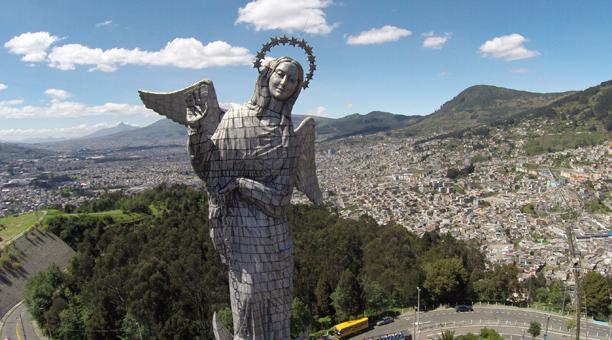
Cascading down the rugged slopes of Pichincha Volcano, the highest official capital city in the world is perhaps the biggest bucket-list destination in all of Ecuador.
In 1978, the center of the city was designated as one of the first ever UNESCO World Cultural Heritage Sites, hailed for its lived-in pueblo homes and gilded Spanish plazas, painted colonial edifices and enchanting cobbled streets, each trodden by conquistadores and Incan imperialists alike.

On the edges of town, the hillsides of El Panecillo give way to the soaring Andean peaks, mist-clad or snow-topped depending on the time of year.
Meanwhile, Mercado Santa Clara and the various eateries pulse with local chatter and camarones and cuy (that’s guinea pig to you and me!) dishes, and La Carolina Park beats with bikers and football players alike.

Cotopaxi

Brooding and bubbling, mist-clad and snow-tipped, Cotopaxi is the great, hulking monster of the Ecuadorian backcountry.

Although not the highest peak in the country (that honour goes to the colossal massif of Chimborazo), Cotopaxi lurches so high above the horizon that it can even be seen from the central districts of Quito when the mists clear.
Climbers come in their droves to conquer the summit too, strapping on the crampons and wielding ice picks as they attempt to scale what is one of the few permanent ice fields on the Earth’s equatorial circumference.

Cuenca

Just like its Spanish namesake, Cuenca is a real beauty.
Oozing colonial charm and elegance from every one of its neo-classical and baroque pores, the city is spiked with countless church spires and topped with the bulbous, coloured domes of the Catedral Nueva – photogenic in the extreme.

Travelers head in to wander the tight-knit streets and enchanting 16th-century plazas here, gawping at the various churches and the perennial bougainvillea blooms that erupt around the Monastery of El Carmen de Asuncion and the like.
And once you’ve checked off all the Spanish history, be sure to head north out of town, to where the crumbling remnants of Ingapirca pepper the hills of Canar Province.
These are the largest known Incan remains in all of Ecuador.

Otavalo

Set high in the Northern Sierra ranges north of Quito, the charming little backwater town of Otavalo has become a real gringo favourite in the last couple of decades.
But its draws aren’t new.

No sir, that buzzing marketplace, complete with its stacks of alpaca wools and colourful Quechua clothes, animist totems and reed-grass voodoo pieces, has been going for centuries, and the people here can trace their roots back to the pre-Incan tribes of the high Andean plateaus.
Then there’s the backcountry, which lurches like a great backbone out of the earth with the peaks of Imbabura Volcano – another of Ecuador’s top climbing spots.

Galapagos Islands

It was in 1835 that one Charles Darwin and his ship, the HMS Beagle, drifted in to these far-flung isles some 906 kilometers west of the Ecuadorian mainland.
What the great scientist found there was to inspire one of the most revolutionary theories of all time.

Yes sir, from blue-footed boobies to red-billed tropicbirds, colossal albatrosses to fur seals and bottlenose dolphins, red bats and flamingos all peppering the volcanic slopes and windswept beaches here, it’s hardly surprising that Galapagos was – and is – famed mainly for its great biodiversity.
Today, travelers come to spy out the arrays of wondrous wildlife, scuba dive in the reefs and explore the otherworldly landscapes of the archipelago’s hinterland.

Guayaquil

Guayaquil is the great southern metropolis, Ecuador’s largest city, and a throbbing port town with multicultural influences coming out of its ears.
It can be found straddling the delta of the Guayas River as it spread out to meet the Pacific Ocean; a patchwork of breeze-block barrios and ice-cream-coloured hillside homes that finds its zenith on the bubbling Malecon walkway along the water.

Here, ceviche holes-in-the-wall throw out homemade seafood salads and students straight out of Guayaquil’s many lecture halls sip beers as the sun sets against the sea.
Meanwhile, the Zona Rosa and Penas districts pulse with nightclubs and discos, and there’s always somewhere to sip a cheeky tequila in the early hours!
Quilotoa Loop
Hikers who enjoy trekking through the backcountry surely will enjoy the Quilotoa loop, a trail that takes visitors through several of Ecuador’s remote Andean villages. 


Hiking the loop can take up to four days, but can be done in less time if hikers take a bus between points, though they’d be missing out on some ancient trails if they did this. The views of a crater lake in Quilotoa are nothing short of spectacular. Villages host colorful markets throughout the week, with Sanquisili’s Thursday market considered one of the best.


South America Peru tours - SA Peru, can help you plan a memorable trip with many diverse tour options. Exploring the old Inca palaces, hike along Inca trails, witness colorful local celebrations, visit museums with amazing artifacts before making your way to the amazing Amazon Rainforest wildlife, the wonderful beaches, and the marvelous Patagonia.

miércoles, 11 de enero de 2017

Best Places to Visit in Brazil

Famous for being home to one of the world’s top football teams, the Rio de Janeiro Carnival and the remarkable Iguazu Falls, Brazil is an exciting world travel destination. As South America’s largest country, Brazil covers a majority of the continent’s northeastern region and borders all of its countries except for Chile and Ecuador. From the Amazon rainforest in the North to the tropical beaches along the Atlantic, to the Pantanal wetlands and the vibrant metropolises of the Southeast there are plenty of interesting places to visit in Brazil.


Brasilia

Located in the Brazilian Highlands, Brasilia was installed in 1960 as Brazil’s capital. Brazil’s former President Juscelino Kubitschek ordered the city to be planned and developed into what some refer to as a utopia. Brasilia’s modern day infrastructure is designed in the shape of an airplane in which each of its sections serve as different districts such as government, commercial, residential and cultural. The city’s new and creative designed buildings attracts many architecture aficionados. Most significant is the Three Powers Square, which houses the Presidential Palace, the Congress and the Supreme Court. Other important buildings include the Brasilia Cathedral with its glass roof that resembles hands reaching up to heaven.


Olinda

One of Brazil’s best-preserved colonial cities, Olinda is located on Atlantic Coast in the northeastern state of Pernambuco. Perched on a picturesque hilltop surrounded by trees, Olinda’s historic downtown is a treasure trove of colonial churches, colorful old houses, restaurants, museums and numerous artisan studios. Every year, Olinda hosts its lively Carnival celebration that differs somewhat from those of Rio de Janeiro and Salvador in that Olinda’s festival is best attended at daytime and features the music, dances and traditions of African culture.(south america tours)


Fortaleza

Nice beaches, dynamic shopping and lively culture all make Fortaleza one of Brazil’s popular places to visit. The capital of the Ceará state on the country’s northeastern coast, Fortaleza is Brazil’s fifth largest city. The most popular beach is Praia do Futuro, but other favorites are Iracema, Mucuripe and Meireles. Not only are the beaches great for swimming, sunbathing and surfing, but they also offer hotels and restaurants. Fortaleza also serves as the jumping-off point for many visitors to truly spectacular beaches, rolling dunes and idyllic fishing villages up and down the Ceará coast.


Paraty

A paradise of tropical forests, waterfalls, emerald sea and coastal mountains, Parati is a popular tourist attraction located along Brazil’s Green Coast in the Rio de Janeiro state. Also spelled Paraty, this beautiful city is a former Portuguese colony established on the shores of the Bay of Ilha Grande. The heart of Parati is its historic center with cobbled streets and multicolored colonial houses, many of which now serve as bed-and-breakfast accommodations called pousadas. One of the most popular attractions are the colonial defense forts that still boast original walls and cannons.(south america travel)


Recife

Nicknamed the “Venice of Brazil” because of its numerous waterways and bridges, Recife is the capital of the Pernambuco state and one of the largest and most important cities on Brazil’s northeastern coast. Situated amid tropical forests with many islands and rivers, Recife is a popular tourist destination because of its historic old town, beaches and vibrant culture. Recife was a Dutch colony during the 17th century, and nowhere is this more evident than the historic district where many colonial buildings still remain. The beaches here are considered some of the best in Brazil. Lined with hotels, restaurants and bars, Boa Viagem is the most popular beach with its pristine white sands, clear water and coral reef.


Manaus

The capital of the Amazonas state in northwestern Brazil, Manaus is an important tourist destination because it serves as a gateway to the Amazon rainforest. As a result of the region’s flourishing rubber industry during the early 20th century, Manaus today is one of Brazil’s largest cities, featuring distinguished landmarks like the Amazonas Opera House, and the Rio Negro Palace. Another significant sight is the Meeting of the Waters, which is a natural phenomenon where the two rivers of Negro and Solimões run side by side for more than three miles without fully mixing.(south america tours)


Salvador

A historic Old City, beautiful beaches, lively culture and one of the world’s biggest Carnival celebrations all fashion Salvador into one of the best places to visit in Brazil. One of the oldest cities in the Americas, Salvador is Brazil’s third largest city and the capital of the Bahia state. Situated on the coast of the Bay of All Saints, Salvador offers fantastic beaches that are ideal for sunbathing, swimming and surfing. Some of the most popular include Porto de Barra, Flamengo and Stella Maris.


Sao Paulo

Not only is Sao Paulo the largest city in Brazil, but it is also one of the largest in the world according to population. Located in southeastern Brazil, Sao Paulo is known for its skyscrapers, gastronomy and robust culture scene. It is home to many ethnic groups from all over the globe including the largest Japanese community outside of Japan. Although Sao Paulo is known for its concrete jungle, it is also contains a large number of public parks and even portions of the Atlantic rainforest.(south america travel)


Iguazu Falls

One of the world’s most stunning natural wonders, Iguazu Falls is a series of magnificent waterfalls located on the Iguazu River, straddling the border between Brazil and Argentina. The falls in and of themselves are a breathtaking spectacle, but their beauty is all the more enhanced by the surrounding lush forest teeming in exotic wildlife. The gateway to the falls on the Brazilian side is Foz do Iguaçu, a big and reasonably safe city by Brazilian standards.


Rio de Janeiro

There is no destination on earth more animated and exciting than Rio de Janeiro. Located in southeastern Brazil, Rio de Janeiro is the most visited city of South America due to its famous mountains, landmarks, beaches and Carnival festival. Rio de Janeiro is situated on one of the world’s largest harbors surrounded by natural attractions that include the Sugarloaf and Corcovado mountains and famous beaches like Copacabana and Ipanema. The city’s iconic landmark is the enormous Christ the Redeemer statue sitting atop Corcovado mountain. Carnival celebrations here are among the largest in the world, with vibrant parades, costumes, dancing, music, fireworks and street parties.


Travel with us, South America Peru Tours - SA Peru. We can offer you trips throughout the most highlighted destinations in South America. We will take you to the best parts of Peru, Brazil, Ecuador, Argentina y Bolivia. Come with us and enjoy!